Amorphous vs CRGO Cores for Distribution Transformers
Amorphous cores cut no-load loss dramatically, but they change the core line, the annealing process and the total cost model.
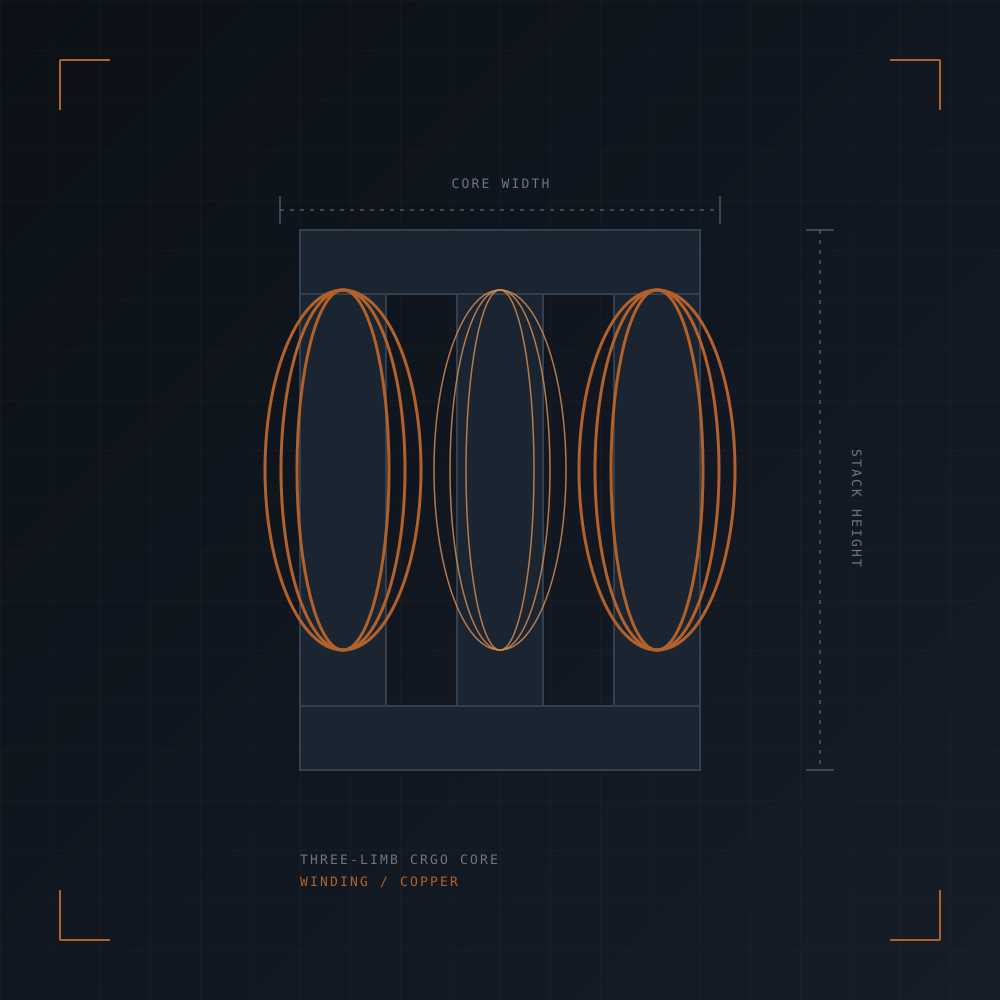
Amorphous metal is the default answer when a distribution transformer must meet a very low no-load loss target. The material's disordered atomic structure gives a much lower hysteresis loss than grain-oriented steel.
Where amorphous wins
If the transformer will run at low load for most of its life — as many distribution units do — the no-load loss dominates lifetime energy cost. In that case amorphous can justify its higher material price and more delicate processing.
Where CRGO still wins
CRGO is easier to slit, cut and stack, and the supply base is broader. For higher loads, or where the factory is not equipped for amorphous ribbon handling and annealing, CRGO can be the lower-risk choice.
The hidden costs
Amorphous ribbon is thin and brittle. It needs careful tension control, clean cutting and a stress-relief anneal. The core line may need new tooling, and scrap rates can be higher during ramp-up. Include those costs in the comparison, not just the steel price per tonne.
A practical test
Quote both designs through the same core builder, with the same efficiency target and the same annual load profile. Compare landed material cost, expected scrap, annealing cost and measured no-load loss — then decide.
Need this applied to a project?
Send the product, standard and destination. We will translate the general guidance into a specification and quotation basis.
Request a quote